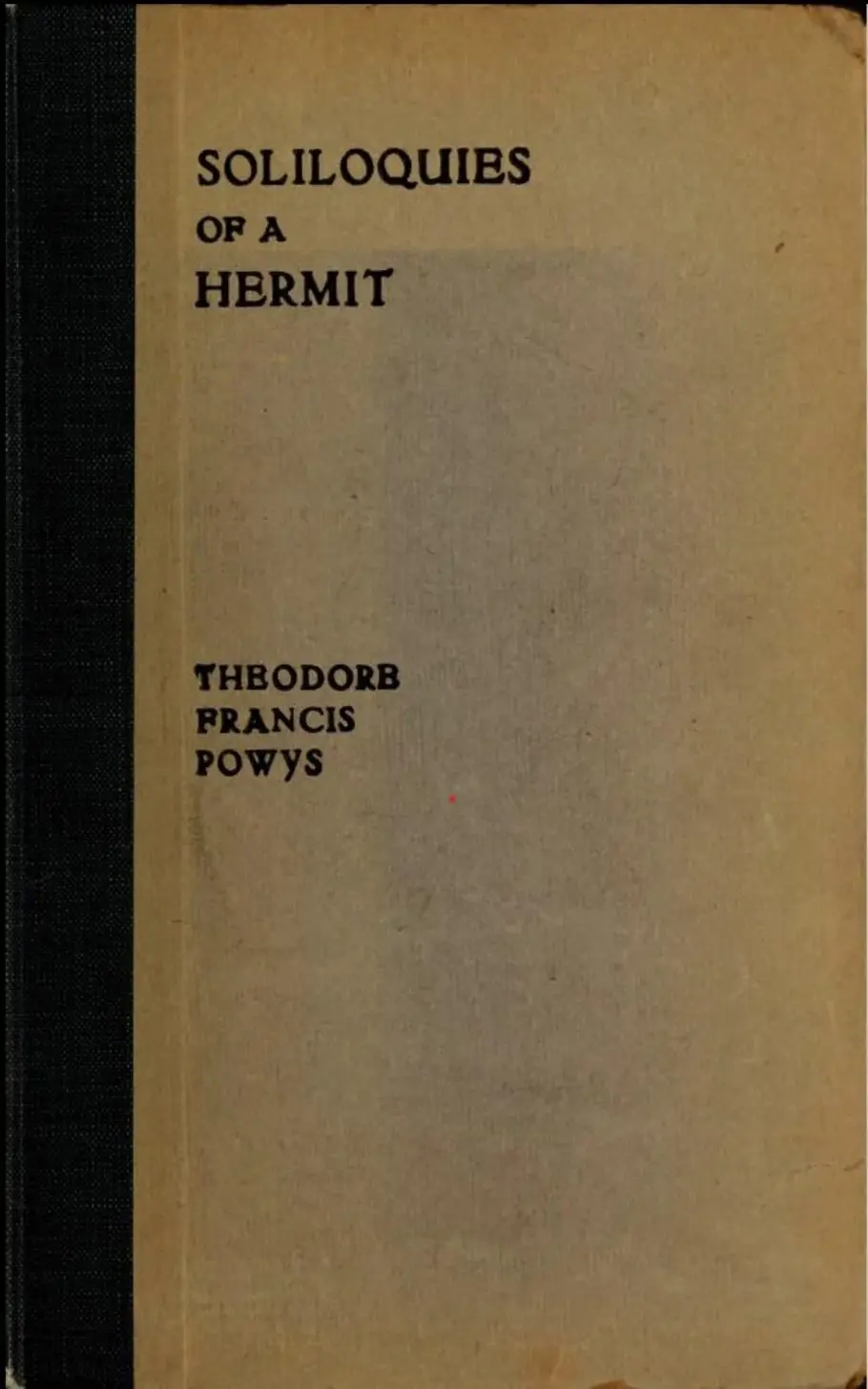
Soliloquies of a Hermit
Soliloquies of a Hermit is a profound and deeply personal exploration of the human soul, written from the perspective of a self-described “priest in the cloud of God” who lives outside the traditional folds of the Church. Residing in a “hut between the hills,” the narrator rejects the “easy road” of fixed beliefs to grapple with the “moods of God”—the shifting, often contradictory forces of love, hate, and cruelty that pass through human “clay” like mystic winds.
The book presents a sharp contrast between the “common man,” who is dominated by a single “getting mood” focused on work and material gain, and the “priest,” who is vulnerable and broken by God, forced to experience the full spectrum of divine emotions. Through these meditations, the author argues that modern man has been corrupted by an “iron-eyed, restless, nail-making devil” of industry, losing the ability to find joy in the present moment. Instead, the hermit advocates for the beauty of the broken and the common, finding more of God in a worn-out chair or a shattered garden roller than in things that are “sound and whole”.