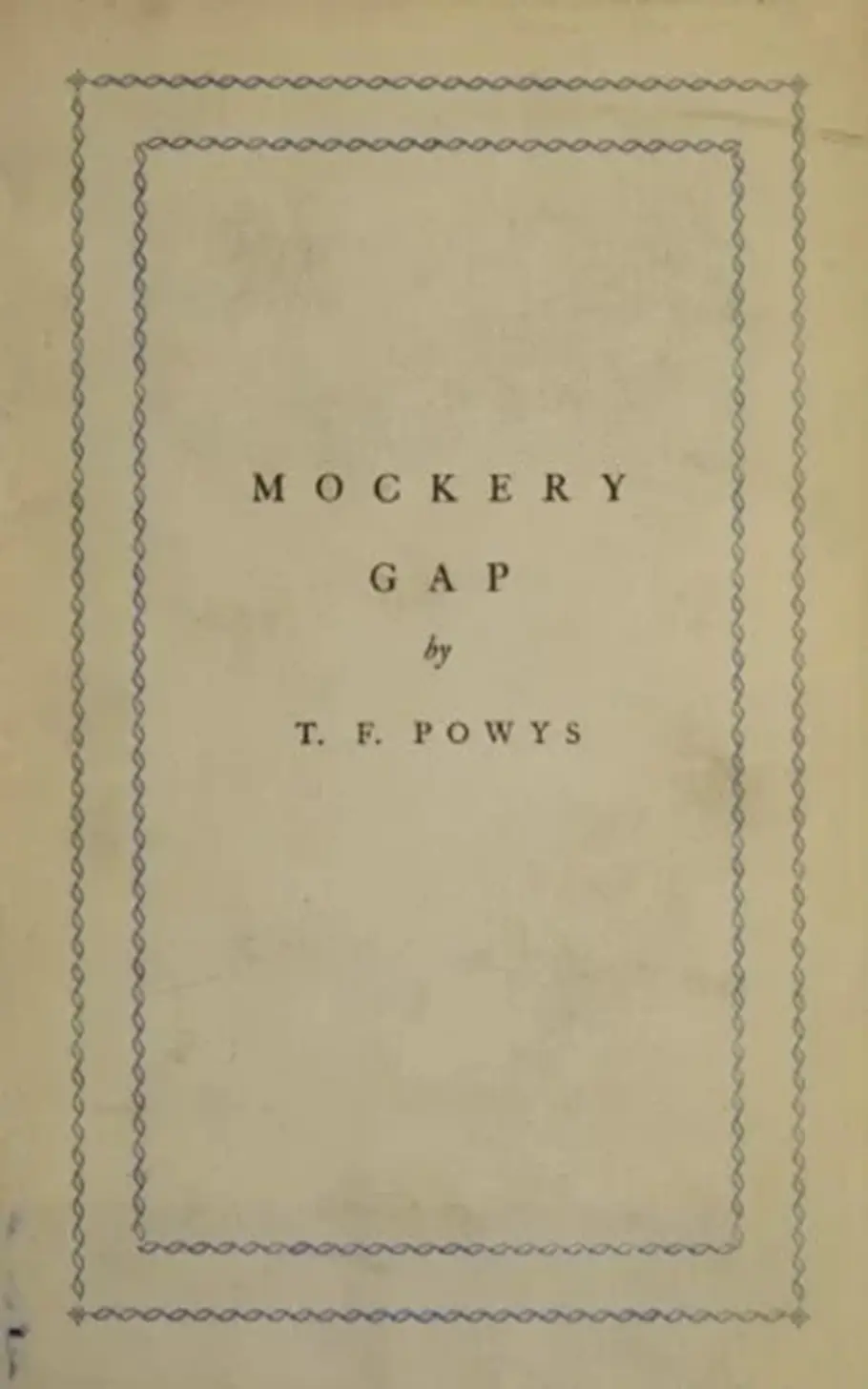
Mockery Gap
Set in a seaside village that prefers to keep its distance from the waves, Mockery Gap is a haunting and whimsical allegorical tale by T. F. Powys. The village is a place of rigid social “estates” and long-standing feuds, most notably between the Prings and the Pottles, whose cottages glare at one another like angry dogs. Life in the Gap is defined by its eccentric inhabitants, from Mr. Caddy, who tells stories to his ducks, to the Rev. Pattimore, a moralistic vicar who neglects his young wife, Nellie, in his ascetic pursuit of spiritual preferment.
The village’s quiet routine is disrupted by the arrival of Mr. James Tarr and his “Field Club” of learned visitors. Tarr delights in planting “exciting seeds of ambition” and dread in the simple minds of the villagers, prompting the schoolmistress Mrs. Topple to spend her days searching for a magical four-leaf clover and Farmer Cheney to obsessively dig for ancient golden earrings beneath a prehistoric mound.
At the heart of the narrative is the arrival of a mysterious, golden-bearded Fisherman whom the village children derisively name the “Nellie-bird”. His presence becomes a catalyst for the Gap’s repressed desires and fears. To the Vicar’s wife, he is a vision of freedom; to the timid Martha Pink, he is a herald of the “beast” she fears is coming from the sea; and to the “other” Mary Gulliver, he is a figure of startling, “naked” reality.
The Chronicles of Mockery Gap explores themes of gossip, religious repression, and the search for meaning in a world where the mundane and the monstrous frequently overlap. Through tragic disappearances in the surf and the eventual breaking of the Vicar’s cold pride, the sea—though unloved by the villagers—ultimately strips away their illusions, leading to a strange and quiet redemption.